
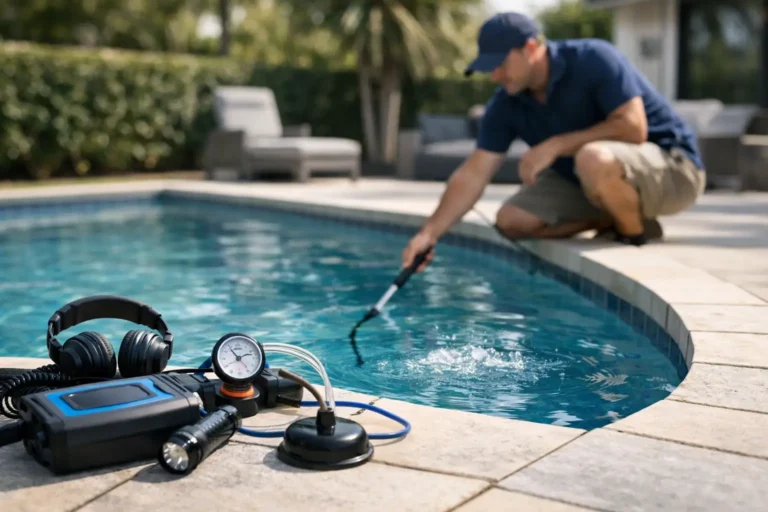
If your pool water level keeps dropping and you’re adding water more often than usual, the first question is usually the same: how much does pool leak detection cost? That’s a fair question, especially when you are trying to protect your pool without paying for work you may not need. The short answer is that leak detection pricing can vary based on the type of pool, the suspected leak location, and how much testing is required to pinpoint the problem.
For most homeowners, professional pool leak detection typically falls somewhere between a few hundred dollars and the low four-figure range when testing becomes more complex. A simple inspection is usually more affordable. A full diagnostic process that involves pressure testing underground lines, diving inspections, electronic listening equipment, or multiple leak points will cost more. The real value is not just finding out whether you have a leak. It is finding the exact source before water loss turns into structural damage, deck movement, equipment strain, or a much larger repair bill.
In many residential cases, homeowners can expect pool leak detection to start around $250 to $500 for a basic diagnostic visit. If the issue appears to be in plumbing lines, the main drain, skimmer, return lines, or hidden underground areas, pricing may move closer to $500 to $1,000 or more depending on the time and tools required.
That range is wide for a reason. Leak detection is not a flat, one-size-fits-all service. Some leaks are visible around fittings, lights, tile lines, or cracked plaster. Others are buried behind walls, under decking, or inside pressure and suction lines. A professional company is charging not just for a visit, but for experience, specialized testing, and the ability to identify the problem accurately instead of guessing.
If you receive a very low quote over the phone without anyone asking about your pool symptoms, pool size, equipment, or water loss pattern, that is worth questioning. Good leak detection depends on details.
The biggest factor is where the leak is suspected. A suspected plumbing leak usually costs more to diagnose than a visible shell or fitting issue because line testing is more technical. Pressure testing, isolation of lines, and locating a leak beneath concrete or landscaping can take more time than checking a skimmer throat or a light niche.
Pool type matters too. A newer plaster pool with accessible equipment may be more straightforward than an older pool with multiple repairs, added water features, aging pipes, or past remodel work. Spas connected to the pool can also complicate testing because valves, spillways, and shared plumbing create more possible failure points.
Location on the property can affect labor as well. If a technician has to work around tight equipment pads, elevated lots, decorative hardscape, or limited access, the process may take longer. In Southern California, older pools in established neighborhoods sometimes have a mix of original plumbing and later upgrades, which can make diagnosis less simple than it first appears.
The final cost also depends on whether the fee covers detection only or includes minor on-the-spot repairs. Some companies separate those charges. Others may apply part of the diagnostic cost toward repair work if you move forward with them.
A professional leak detection appointment often begins with questions about your water loss, how often you refill the pool, whether the leak seems worse when the system is running, and whether you have noticed soggy spots, air in the pump basket, algae changes, or cracks.
From there, testing may include a visual inspection of the pool shell, tile line, skimmer, returns, drains, lights, equipment, and exposed plumbing. Dye testing may be used around cracks or fittings to see where water is being pulled out. If plumbing is suspected, pressure testing can isolate specific lines. In some cases, specialized listening equipment helps identify underground leaks without unnecessary demolition.
That is why accurate pricing often depends on what the technician finds during the first stage of inspection. The more possible leak points there are, the more involved the work becomes.
Homeowners naturally want to save money, but leak detection is one of those services where the cheapest option is not always the least expensive in the long run. If a company only gives a quick visual opinion without thorough testing, you may end up paying for the wrong repair or fixing one issue while another leak continues.
A missed leak can lead to rising water bills, chemical imbalance, staining, soil washout, shifting deck sections, or damage around the pool structure. If the leak is in a suction line, it can also affect circulation and put extra stress on your pump. What starts as a moderate leak detection bill can look very reasonable compared with weeks or months of unnoticed water loss.
This is especially true for homeowners who are already planning plaster work, tile work, equipment repair, or remodeling. Leak issues should be identified before larger improvements move forward. Otherwise, you risk investing in cosmetic or equipment upgrades while a hidden water loss problem remains underneath.
Not every drop in water level means you have a leak. In Riverside County, evaporation can be significant during hot weather, especially in summer. But there is a difference between normal evaporation and abnormal water loss.
If you are losing more than about a quarter inch to a half inch of water per day, it is worth taking a closer look. If water loss increases when the system is on, that often points toward a pressure-side plumbing issue. If it gets worse when the system is off, it may suggest a suction-side leak. Cracks near the skimmer, wet soil around the pool, frequent air in the system, loose or sinking decking, and chemical use that suddenly increases can all be warning signs.
A bucket test can help confirm whether water loss is beyond normal evaporation, but it will not tell you where the leak is. That is where professional detection becomes worthwhile.
Leak detection and leak repair are related, but they are not the same cost. Detection is the process of locating the exact source. Repair pricing depends on what is actually wrong.
A minor repair at a fitting, skimmer seal, light conduit, or accessible plumbing section may be relatively manageable. A broken underground line under decking, a structural crack, or a failed main drain area can be more involved and more expensive. This is one reason experienced homeowners often prefer a clear diagnostic first. It gives you a real repair plan instead of a guess.
In a service-focused company, the benefit is that the same team can often help you move from diagnosis to repair without passing the problem off to multiple contractors. That saves time and usually reduces confusion.
When comparing providers, ask whether they are licensed and insured, whether they regularly work on residential pools, and whether they handle both diagnosis and repair. You also want to know how they communicate findings. A dependable company should be able to explain what was tested, what was ruled out, what they found, and what repair options make sense.
Clear communication matters just as much as the equipment used. Homeowners should not be left guessing about whether the leak is in the shell, plumbing, or equipment area. If a repair is needed, you should understand the next step before any work begins.
For local homeowners, it also helps to work with a company that understands the pool styles, soil conditions, and common repair issues found in Moreno Valley and surrounding communities. That kind of local experience can make diagnosis faster and more accurate.
Valdez Pool Service and Repair approaches leak issues the same way we approach all pool work – with careful inspection, straightforward recommendations, and respect for the investment you have in your home.
In most cases, yes. If your pool is losing water consistently and the cause is unclear, paying for professional leak detection is often the most cost-effective move. It can stop wasted water, prevent larger structural or equipment damage, and give you confidence that the repair is based on evidence, not trial and error.
The better question is usually not just how much does pool leak detection cost, but how much can it save you by catching the problem early. For many homeowners, that answer becomes obvious once the leak is found.
If you suspect a leak, it helps to act sooner rather than later. A clear inspection today is often the difference between a targeted repair and a much bigger project down the line.